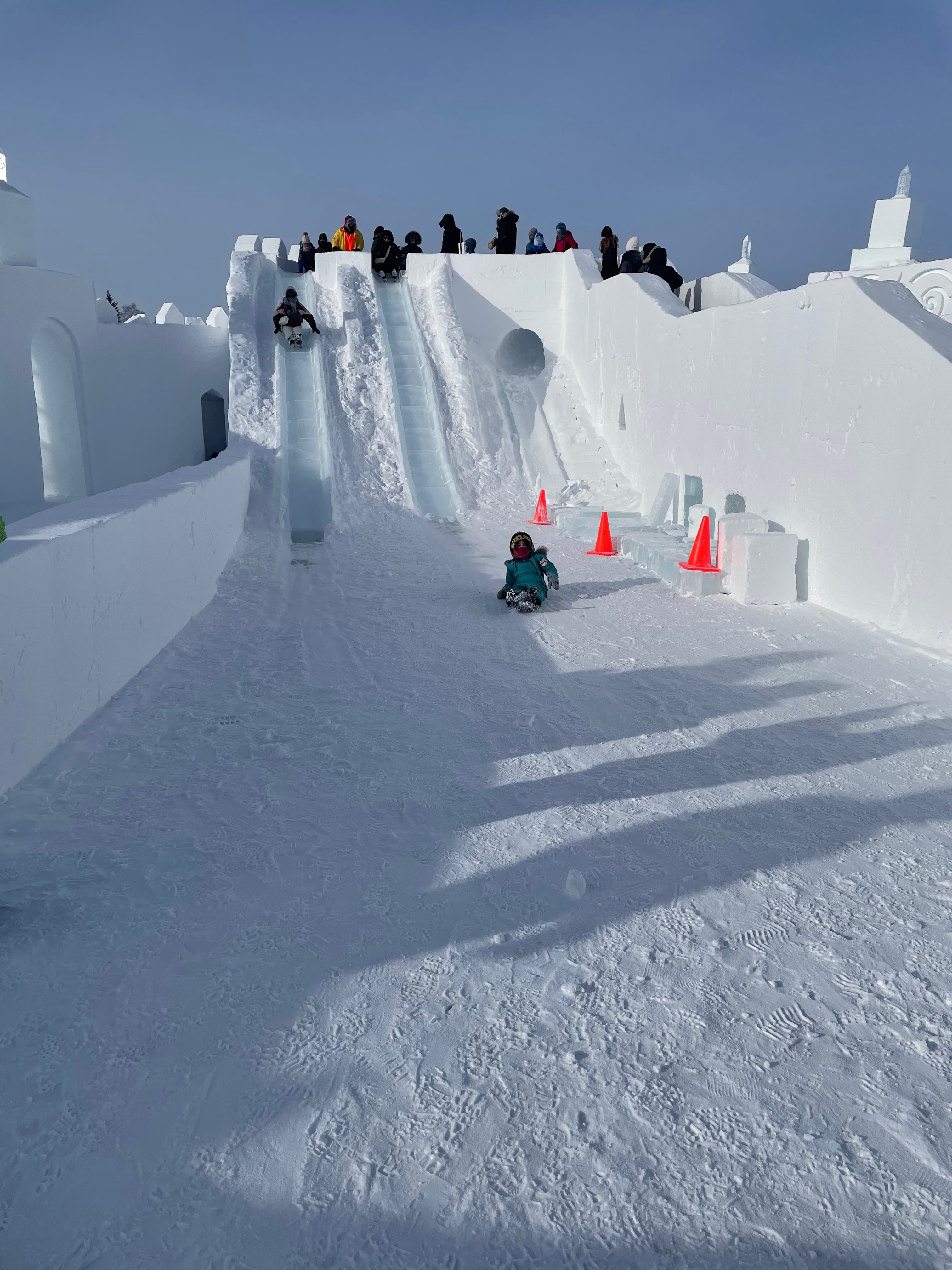
I’ve been the main builder of the ice slides at Snowkings’ Winter Festival for a number of years now. They are one of the most popular parts of the snowy castle, and they get ridden thousands and thousands of times over the course of the month-long festival. I had great hopes of documenting the entire construction of the slide structure this year with photos, but as it turns out, I don’t have as many good ones as I would like. The photo above shows the slides on the opening day of the castle. They have not been ridden very much yet, and the third slide (on the right) is not yet completed. You can see what I built though – two straight slides, one a bit steeper than the other, and a twisty slide through the tunnel under the stairs bridge. This video shows it better than that photo:
I’ve settled in to a bit of a formula for building the “slide platform,” i.e. the top of the slides, where people line up to get onto them. It starts by plotting out a base 16′ X16′ on the ice, and locating it wherever it needs to be in relation to the rest of the castle. Here it is, laid out with 2X4s, with none of the rest of the castle visible yet (it’s under construction to the left out of the picture). You can see Snowking driving the Bobcat, harvesting snow for building somewhere else on the castle.
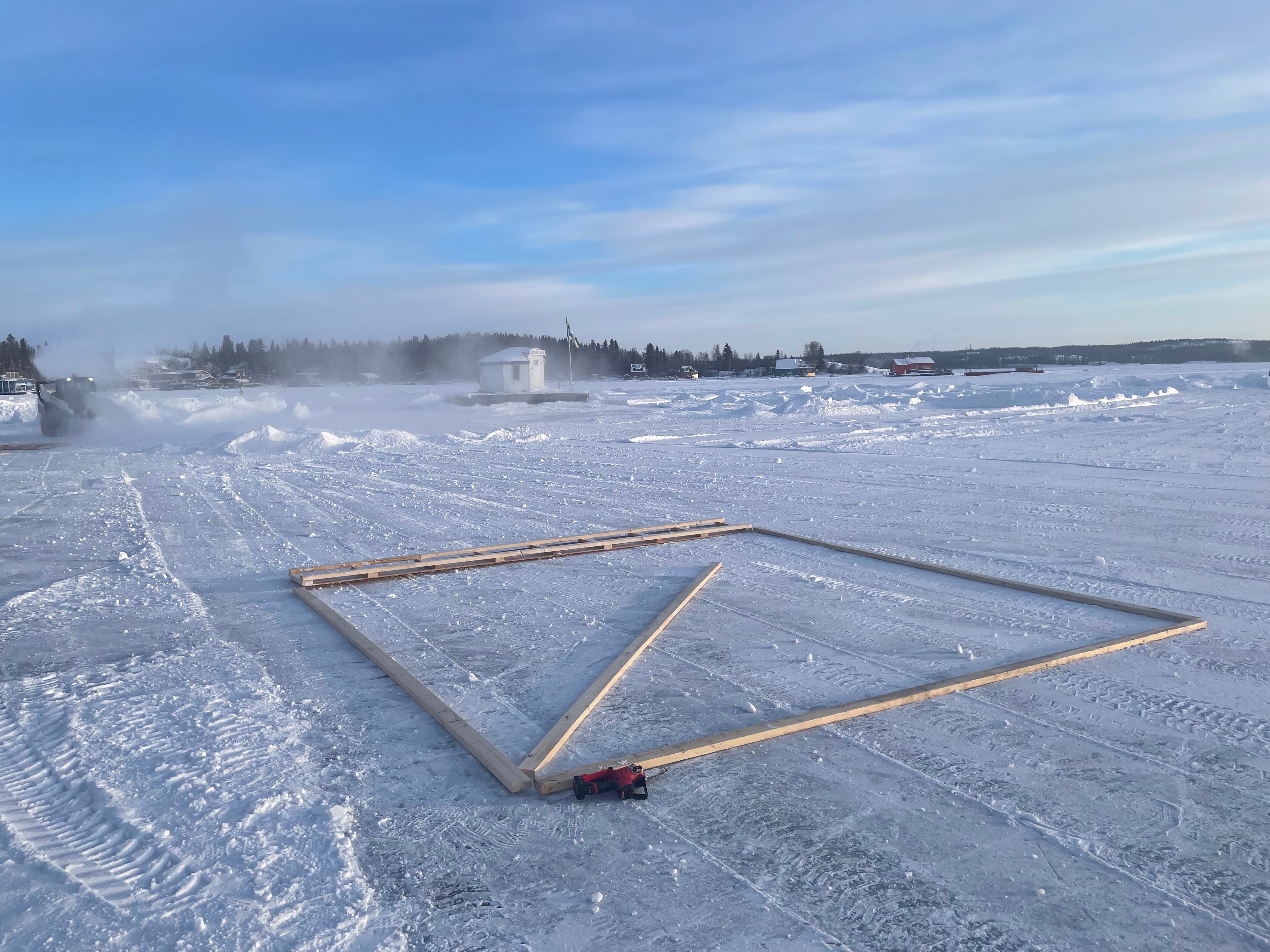
In past years, I’ve always had the slides run perpendicular to the sides of the platform, but this year they were to go at a forty-five degree angle to it. So in this picture, the angled board across the square is showing the future trajectory of the slides. They were aimed straight towards the orange houseboat in the distance (the “Empress of Yellowknife”). The reason they go in that direction is to ensure that the slides are facing away from the warmer afternoon sun as much as possible. One warm sunny day can wreak havoc on the ice if they are facing the sun, and this helps to reduce that risk. I would aim them even more towards the north, but the direction is a compromise between avoiding the sun and having to fit in place with the rest of the castle. (In the end I had to compromise further and aim the slides slightly to the right of their original target).
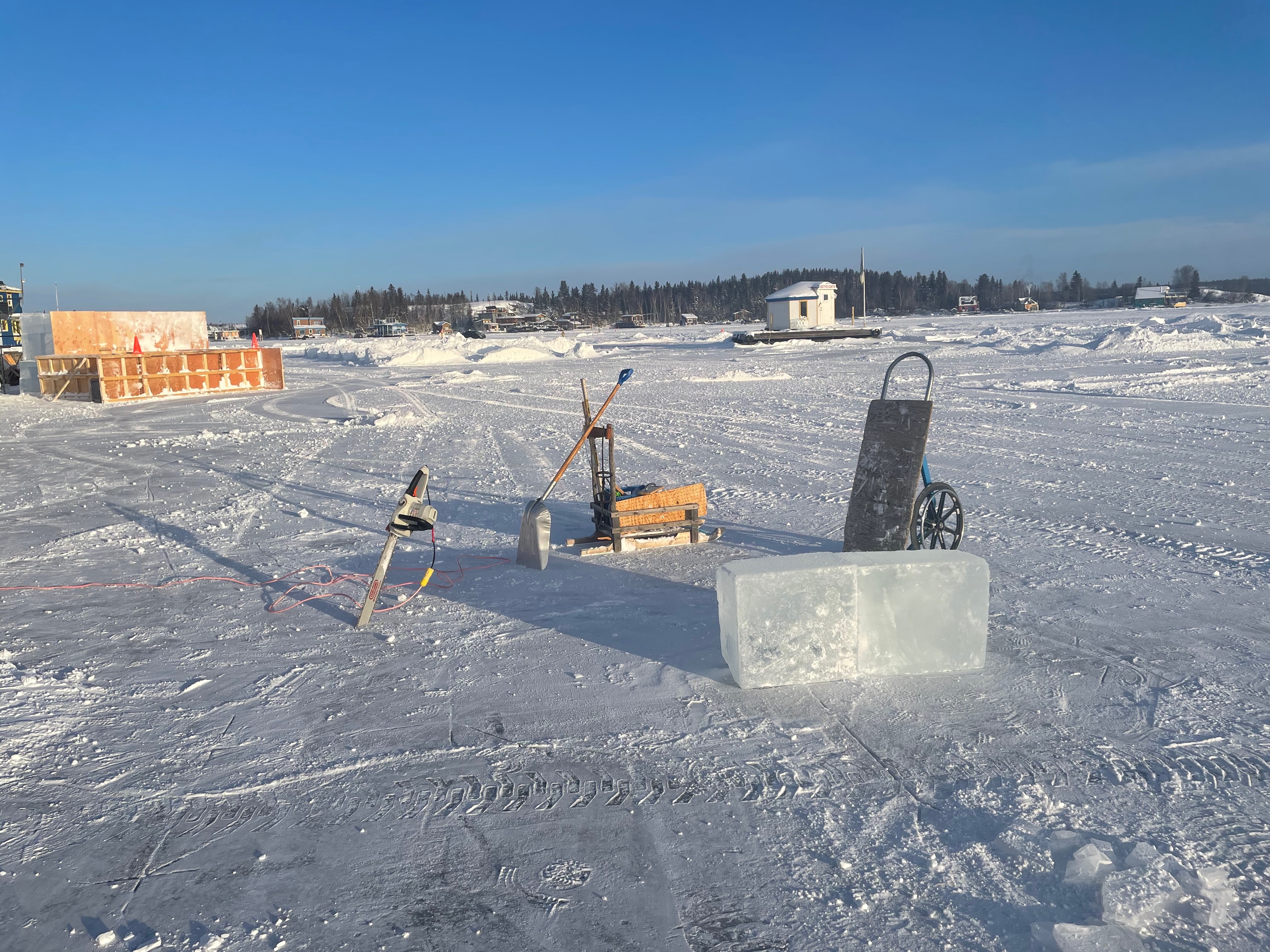
How it all starts: The first two ice blocks laid in place on the ice. These will form a window wall which is sort of the backbone of the whole slide platform. The slide platform will be poured in with snow to a height of almost thirteen feet, with a hollow cavity below. That cavity will be part of of the tunnels under the slides – it was a space that I was calling the solarium this year. The afternoon sunlight streamed in there and made a really beautiful space. This ice wall also acts as a supporting buttress for the snow load above, which helps to reduce slumping. It will also be a feature along the exterior walls of the castle.
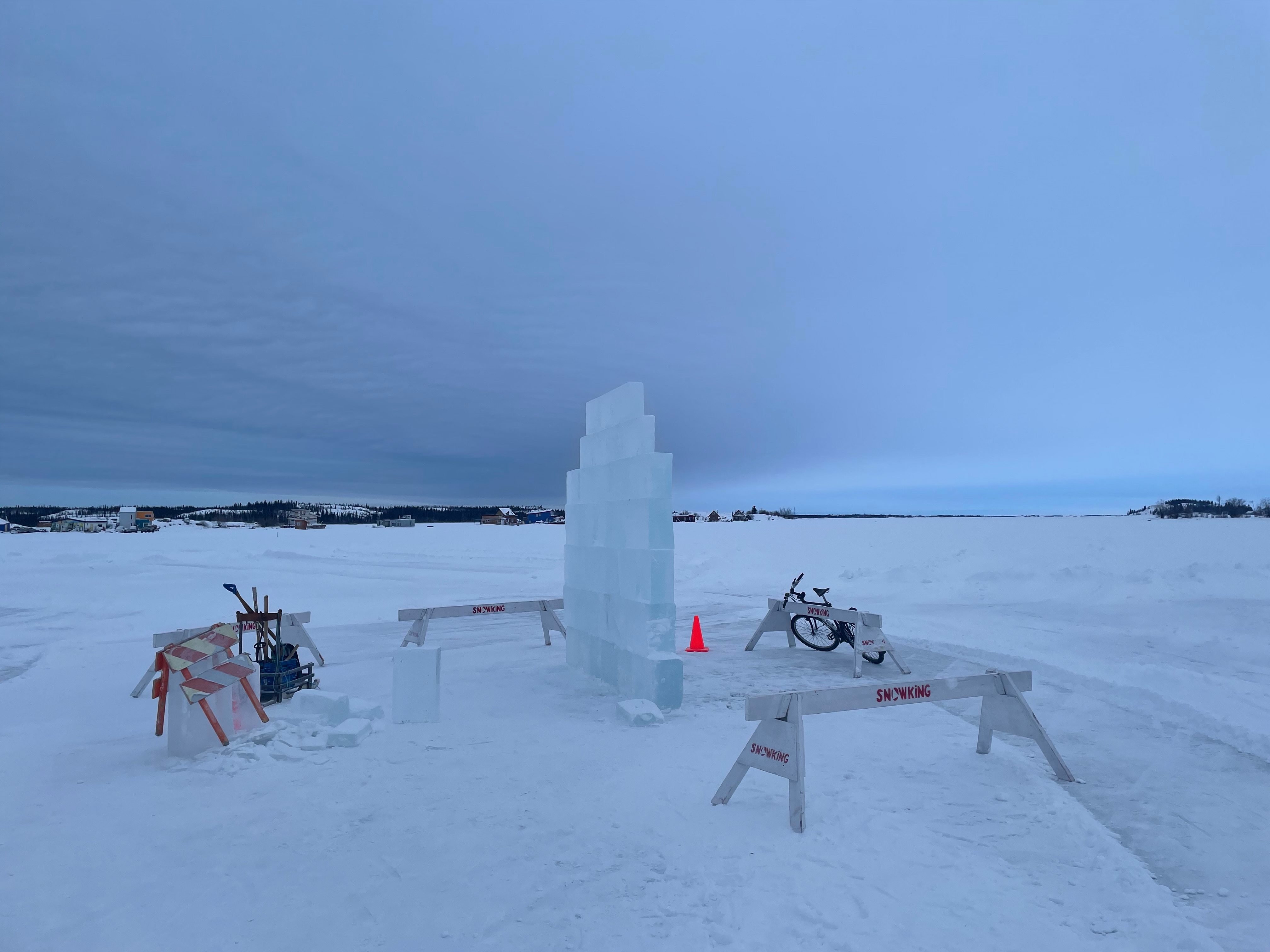
January 28, 2026. Making good progress on the ice wall on a dramatic cloud day, looking south out Yellowknife Bay towards Dettah.
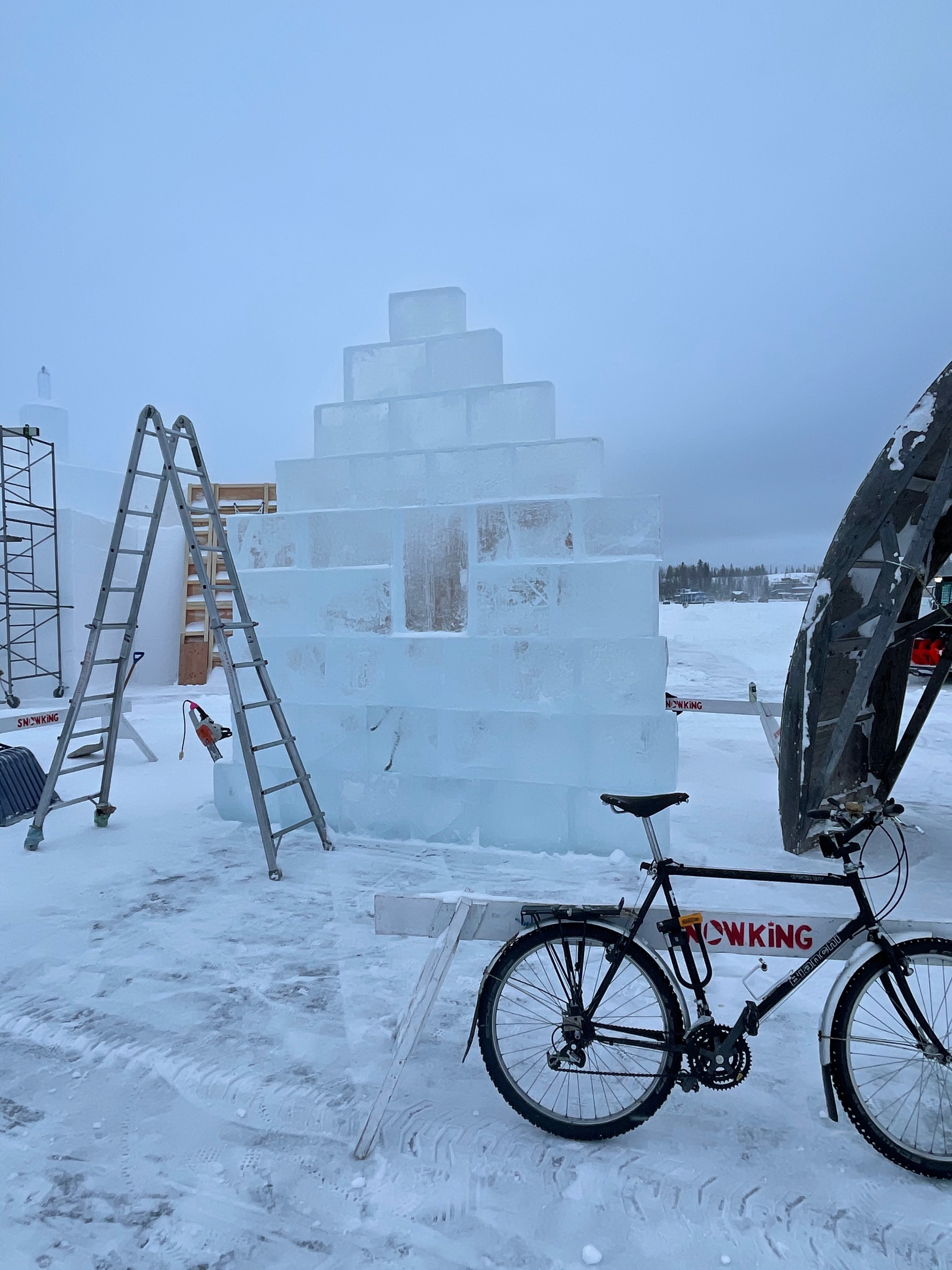
The ice wall is finished, and the formwork is near at hand on the right to start setting up to pour the snow. The wall is free-standing, and measured 12’9″ high, which ended up being the exact height of the top platform for accessing the slides. I did most of the construction on my own. I use smaller ice blocks the higher the wall gets to keep it manageable.
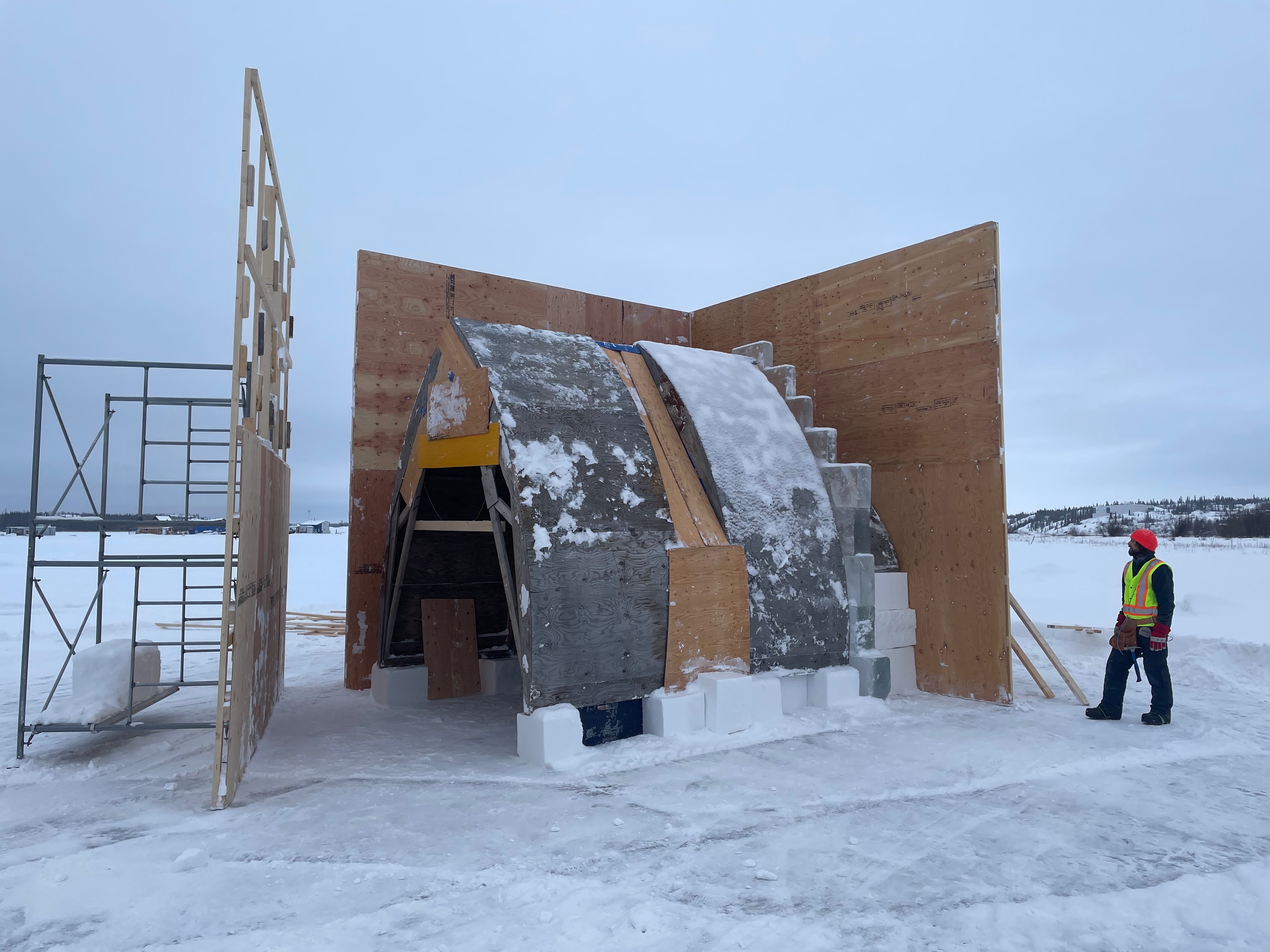
Almost ready to pour. We call these large arched forms “Titan Beetles”, Beetle being the name we use for all of these hinged, arched forms (there are several different sizes, Titan being the largest). The footprint of the solarium will be 10X12 feet; there is also a smaller beetle on the other side of the ice wall which reduces the amount of snow that has to be removed to reveal the outside of the window. The slide platform will be just above the top of the beetle arch, level with the top of the ice. The entire platform will then get railings of snow up to sixteen feet, which is the height of the form walls pictured here. The wall on the left is the “pour wall”, which is the side from which the snow will be blasted in by the Bobcat. The opposite, or back, wall is what we call the “splash wall.” Philippe (“Ever Ready Eddy Frost”) is inspecting the progress, by the looks of it.
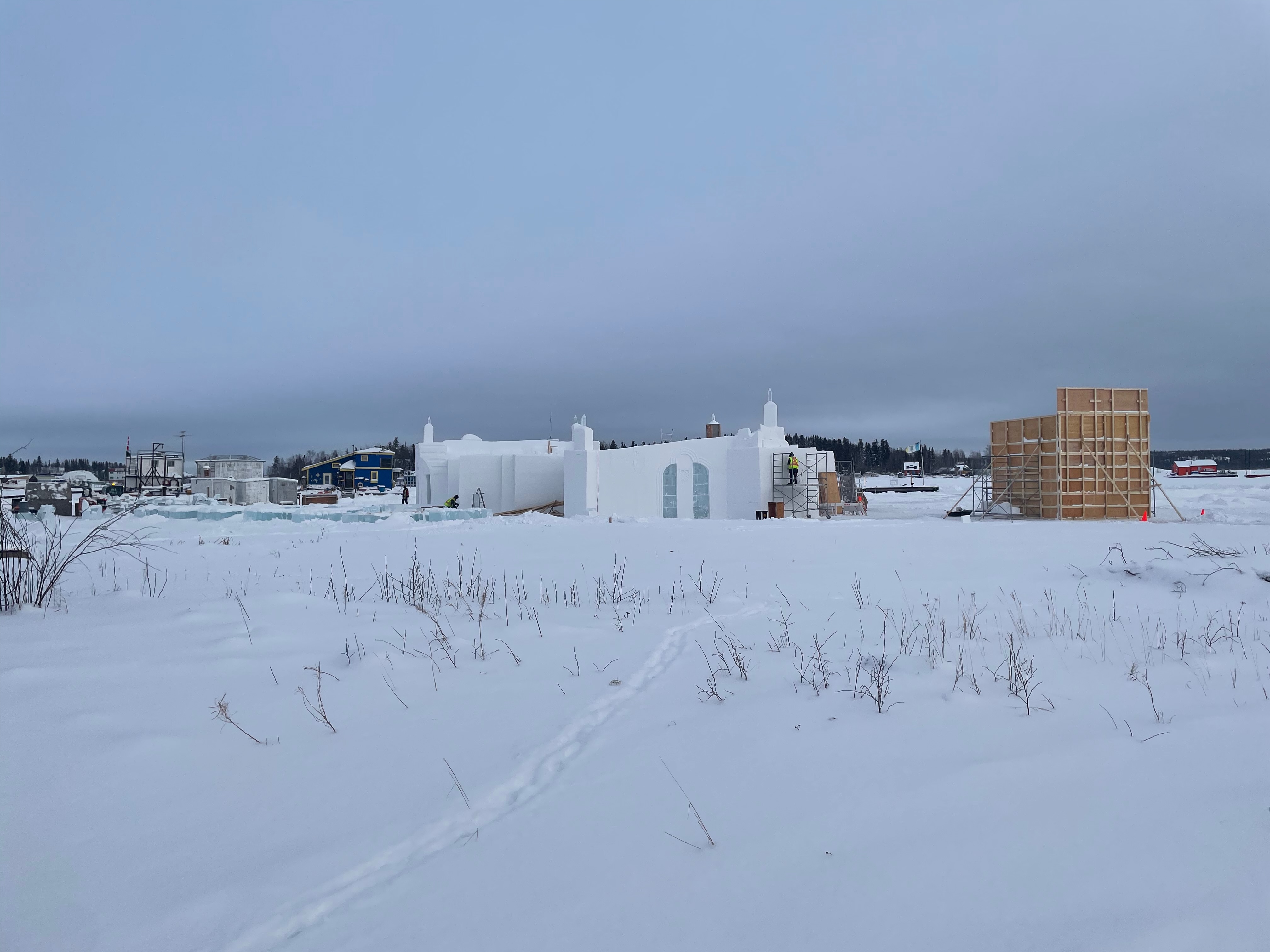
Castle site on Feb 1, 2026. Formwork is all closed in on the slide platform. Wall extenders are on the splash wall to bring its height to 20′, to catch as much snow as possible. Eventually the slide platform will be connected to the main part of the castle, and the courtyard will extend further out to the right.
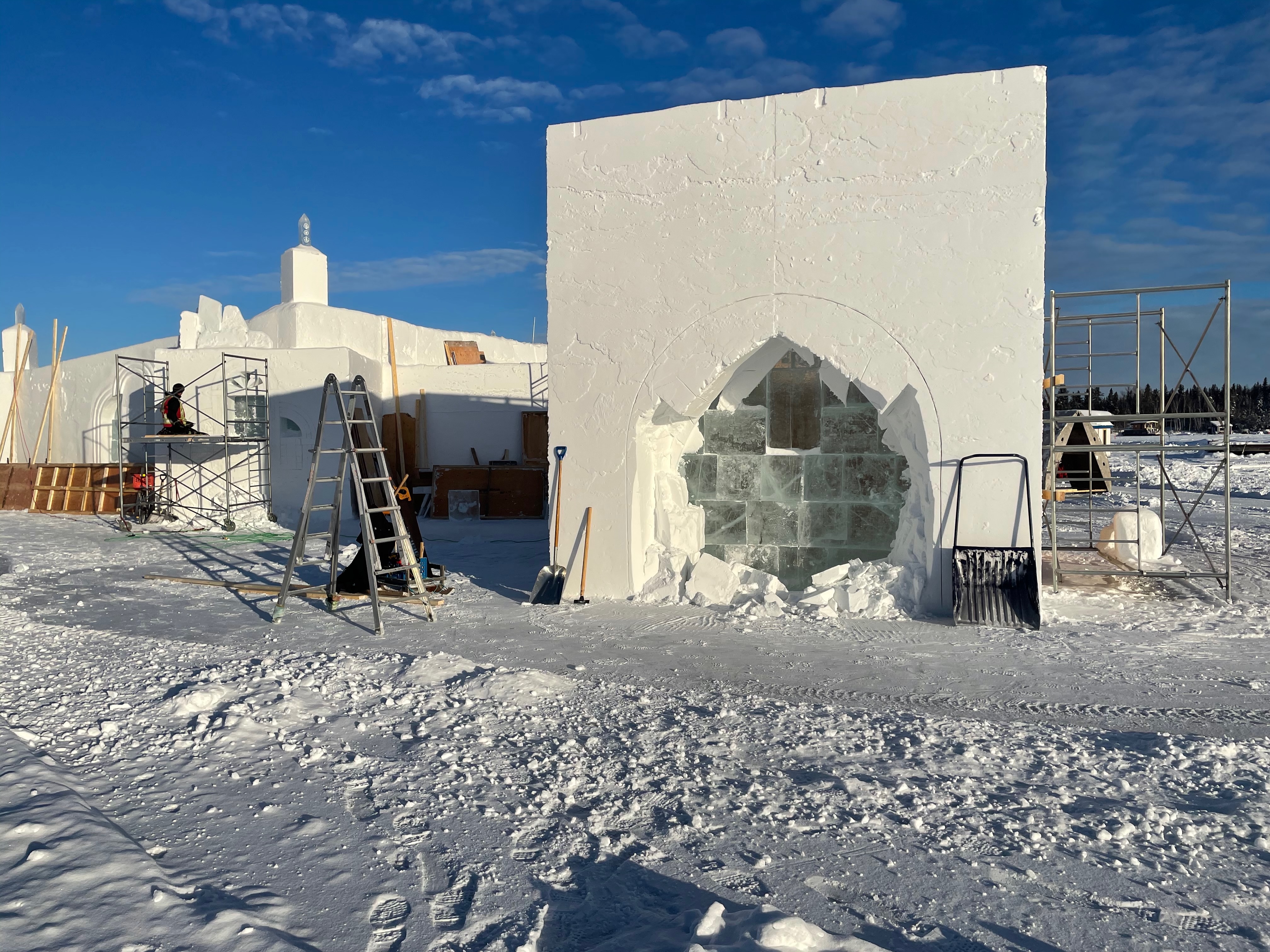
After the snow is poured and all the formwork is removed. I’m working on opening up the exterior of the window to a round arch shape. I always forget how much work it is to remove even this much snow! Most of the window was already clear due to the beetle form that had been in there, but even carving up to the arched line on the wall is several hours’ work. This was intended to be a big feature wall, and I even earmarked it for myself to carve later in the season. Unfortunately, I never had the chance, or took the opportunity, to finish it. It remained a half-round arch on a smooth wall for the entire castle season, and even beyond, surviving teardown and ultimately waiting for spring melt. (As of April 15, this ice wall is still standing).
Speaking of never having a chance… From this point onwards, I must have gotten too caught up in the whirlwind of just getting the slides built, and I basically stopped taking photos. I wish that I had done better at documenting the processes of laying out the slide bases (with tunnels underneath), selecting and prepping ice panels for the actual slides, harvesting and prepping ice for the side bumpers, and actually placing the ice in the slides. This year I did two types of slide construction – the flat, straight ones with side bumpers, and also the “barrel vaulted” twisty slide, which was a return to a style of construction that I first tried in 2021, using “bricks” of ice to create a sort of half-pipe profile in the slide. It would have been great to have more pictures of all that being built, but i gues for now that can all remain a mystery. As an somewhat less informative alternative to all that detailed construction knowledge that I was hoping to share, I can at least offer this longer video of everything completed:
We had an exceptional weather year for maintaining the integrity of the castle and slides. Even near the end of the month when I made that video, everything had held up really well. By this time the sliders had really polished up the slides, and people were sliding as much as sixty feet beyond where the slides met the ice.
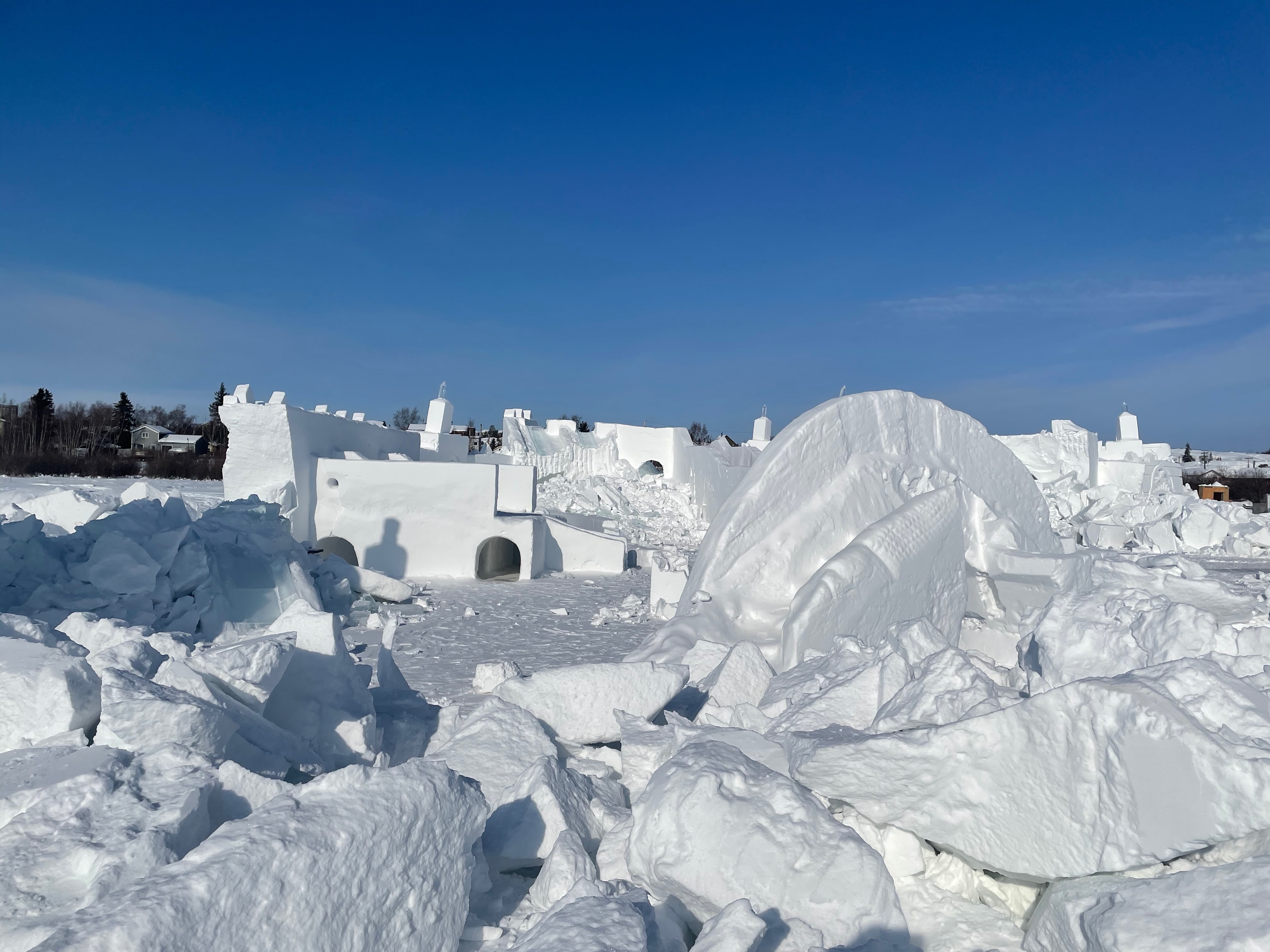
Being a seasonal festival out on the ice of Great Slave Lake, of course the castle has to come to an end at some point. The last day of the festival was March 28, and teardown started shortly after. I always marble at how quickly the castle comes apart, after spending two months building it. On March 31, most of the manual work of disassembly was done by about eight people in about five hours. On April 2, the excavator showed up, and by the end of the day, many of the castle buildings were removed, and that was it for the slides too. Here you can see severed slides across the ruins of the courtyard.