I had the pleasure last fall of attending the Kole Crook Fiddling Association‘s fall workshop in Hay River, Northwest Territories. On the Saturday we had a little talent show in the gymnasium of the school. I sang this old classic and let the great Gordon Stobbe do his thing on the fiddle. Gordon recently received an Order of Canada for his dedications and contributions to the Canadian musical community over the last four decades or more. Congratulations Gordon!
The Pure Laine (Pure Wool) contest at the Pembroke Old Time Fiddling and Step Dancing Competition in Sept 2010, featuring April Verch, Shane Cook and Danny Perreault. Competitors must play tunes one after the other without losing the beat or making mistakes. They aren’t allowed to repeat any song that’s already been played. They shout out the key of the song, and the referee translates for the accompanist. It’s a long video, but I think that’s what makes it most impressive – the sheer number of tunes that each competitor knows. The first disqualification happens about six minutes in. There is also some good trick piano playing in the last couple minutes of the clip.
I would have called this post “fall” or “autumn,” but we’re well into that season now in Yellowknife, probably bordering on winter actually. This little update unfortunately has almost nothing to do with music, since I’ve been so musically inactive lately, except that I’ll mention two upcoming events that I’m excited to be attending: One, the Blackpot Camp/Festival, outside Eunice, Louisiana, home of Marc and Joel Savoy and major centre for Cajun music; and Two, the Texas Folklife and Texas Dancehall Preservation 2nd Annual Festival of Texas Fiddling, in Burton, Texas. I’ll be sure to write something about these events.
For the mean time, all I really wanted to do was post a couple of pictures from around here. People ask “What have you been up to?” and it’s always hard to answer. Mostly this:
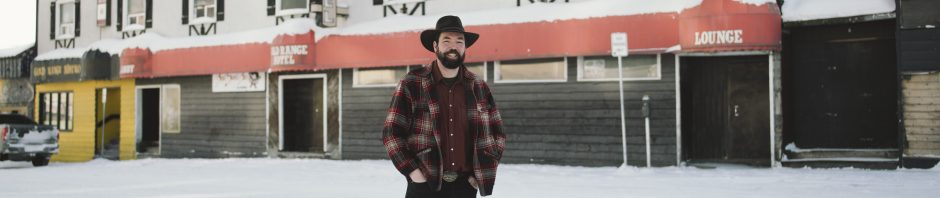
(window cleaning)
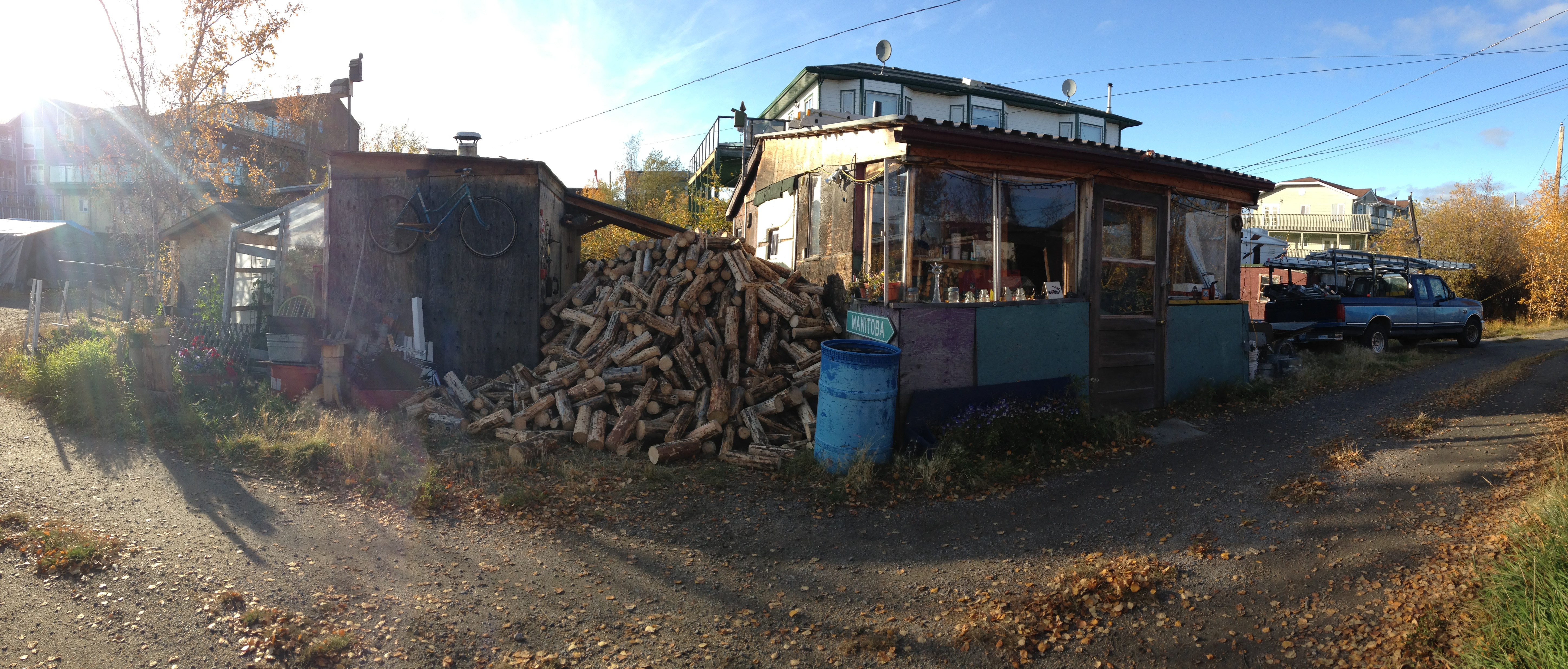
and some of this kind of stuff:
(That’s my shack in the Woodyard, Old Town, Yellowknife. L-R: Garden, Greenhouse, Shed, Three cords of wood waiting to be stacked, Shack, Truck). Photos Joel Maillet.
I had the very lucky opportunity to travel out to the East Arm of Great Slave Lake last week, to housesit Dave Olesen’s family homestead at the Hoarfrost River. I’d never been to the East Arm, and, apart from canoeing there, what better way could there be to experience it for the first time than by traveling out there in Dave’s own bush plane?
We left Yellowknife on Sunday evening from the Plummer’s dock in Old Town, flying in the Bush Hawk for about an hour and a half to the east, with one brief stop at Taltheilei Narrows to drop off a couple of bags at the Plummer’s fishing lodge there. Here I’ll just post some photos and comments from the next three days.
Getting ready to go – loading into the plane on Sunday evening:
Flying east, we were almost right over top of the forest fires that were burning near Reid Lake, as well as Harding, Hearne and Defeat Lakes. It was a nice perspective of what the fires look like, as we flew just over their upwind edge. Lots of it was just smouldering or burning less intensely, but there were some spots that were really raging, with flames as high as the trees:
On Monday morning we went out to check the Olesens’ fish nets with their daughter, Liv. Four nice Lake Trout, most of which would go to feed their dog teams:
We had flown over Dave Smith’s East Arm Freighting barge the night before:
And now they were tucked into a bay just around the corner from the Olesens’ to deliver fuel to a mine. They also had some building materials and a dog sled for the Olesens, so Joel, Kristen and I made a few trips back and forth in the Lund to ferry it to the homestead. Here’s Kristen in front of her place:
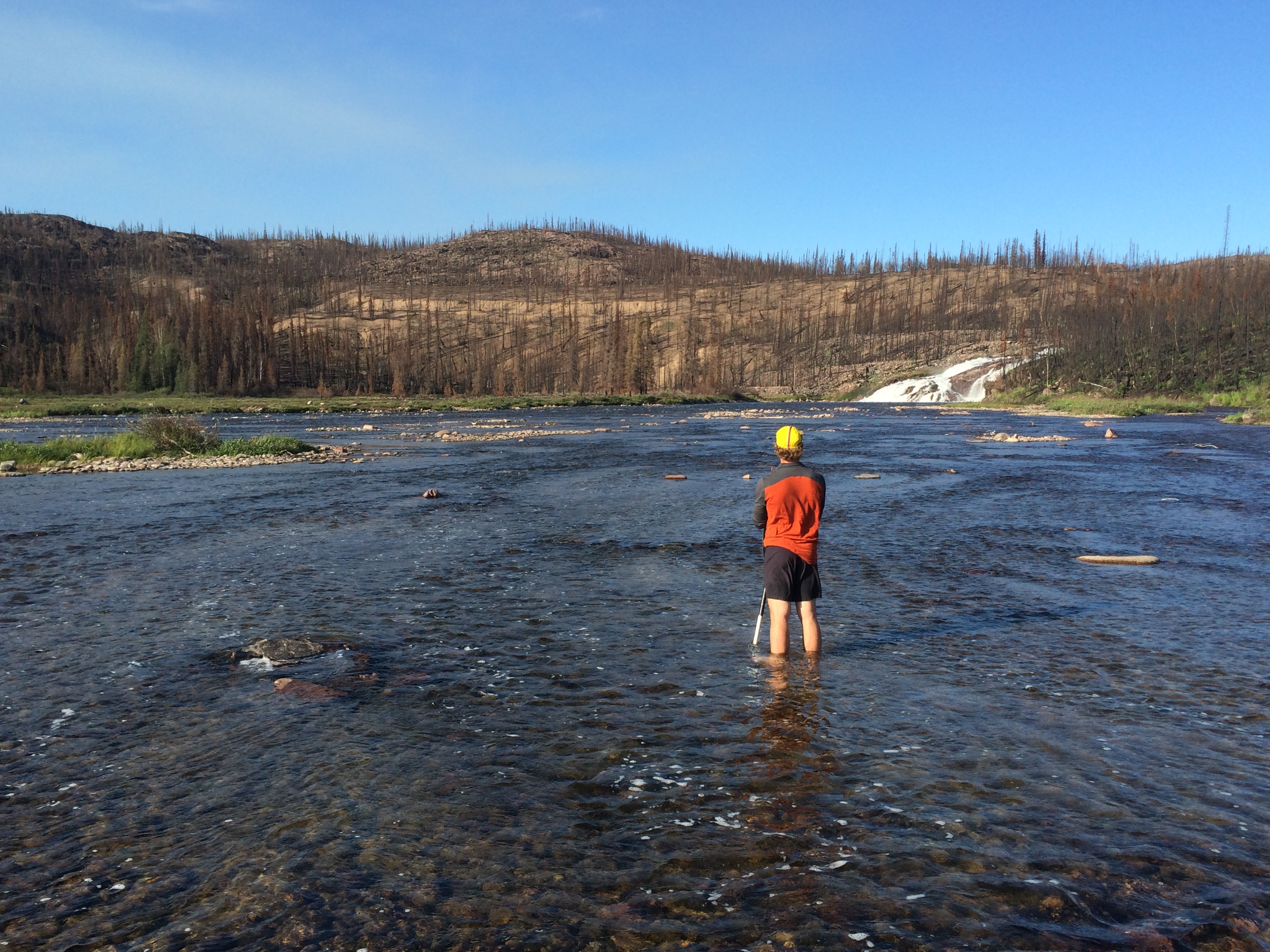
The reason Joel and I were housesitting was that the Olesens were traveling by sailboat down to Taltheilei to pick up their winter’s supply of dog food, a trip that took almost two days, but brought back 8,000 pounds of dog food and rice. We were to look after the dogs and the homestead, but also had lots of time to look around. Our first foray was up the Hoarfrost River a few kilometres. It was one waterfall after another. This is the last one, where the river spills into Great Slave Lake:
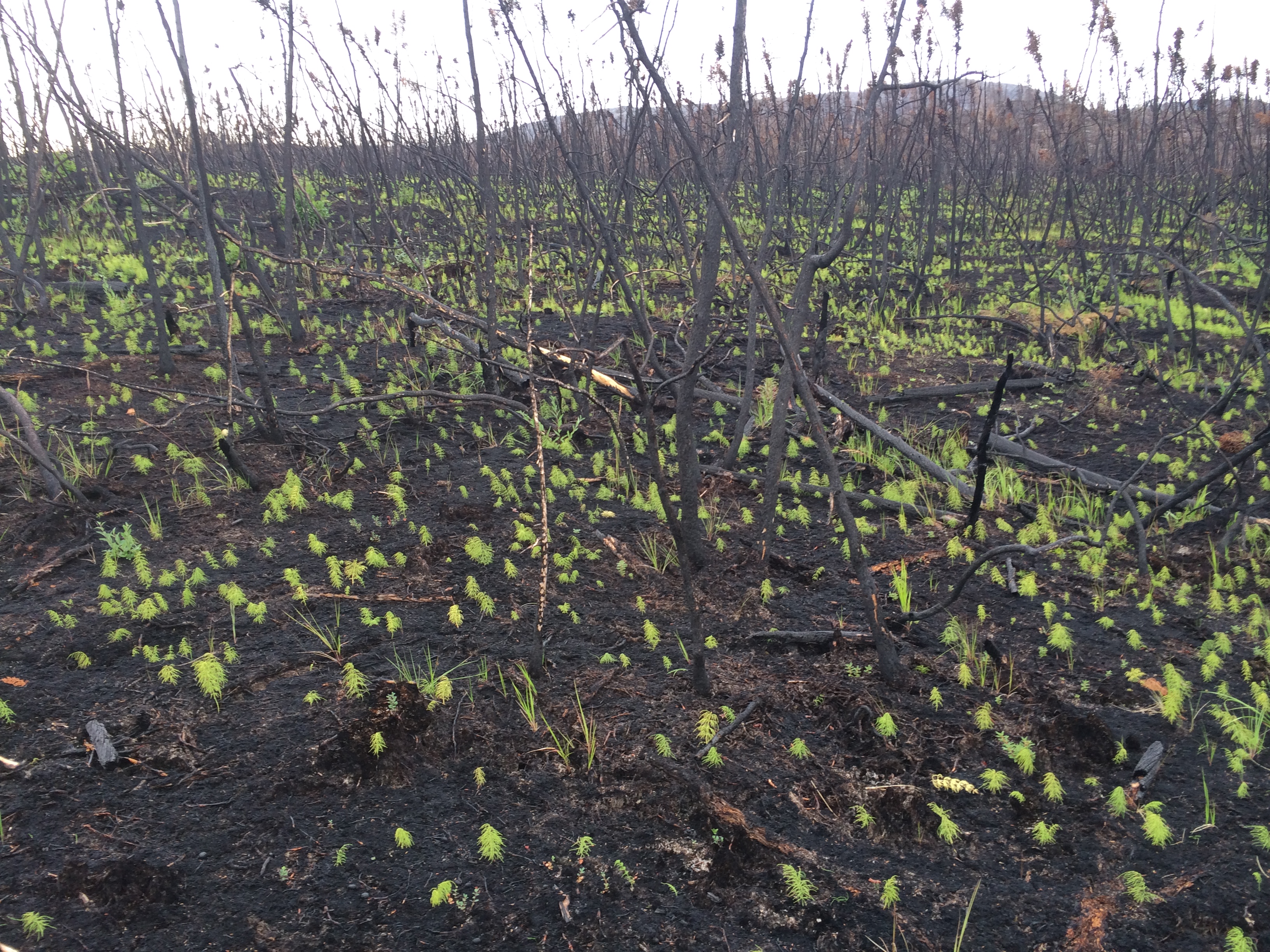
All the area around the Hoarfrost River (including, sadly, the Olesens’ main cabin and guest cabin), burned in a major forest fire last year. It’ll be decades before it looks the way it used to. Here’s where it’s at now:
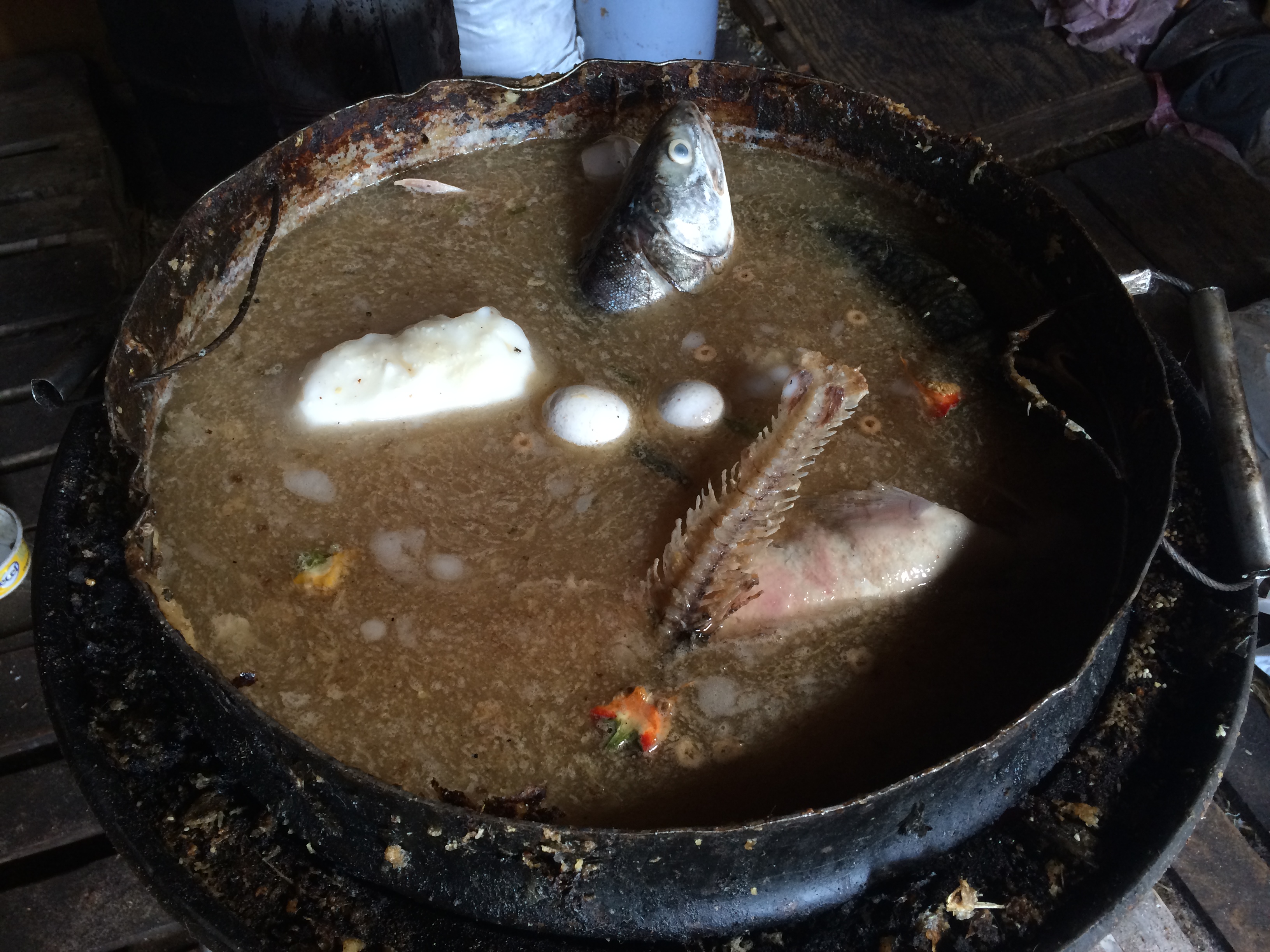
On Tuesday, we cooked up the dog feed in the morning – whole fish and rice in a big cauldron over a wood stove. Once it comes to a boil, it all gets mashed up with a shovel, then scooped into pails to cool down for the rest of the day. The dogs get this meal every two days, alternating with a small scoop of kibble on the off days. I imagine they eat a lot more in the winter, when it’s cold and they’re working. This should be the cover if Rick Sward’s band, Fishead Stew, makes an album:
Here’s Joel again, looking kind of tired after feeding the dogs (one of our few chores, really):
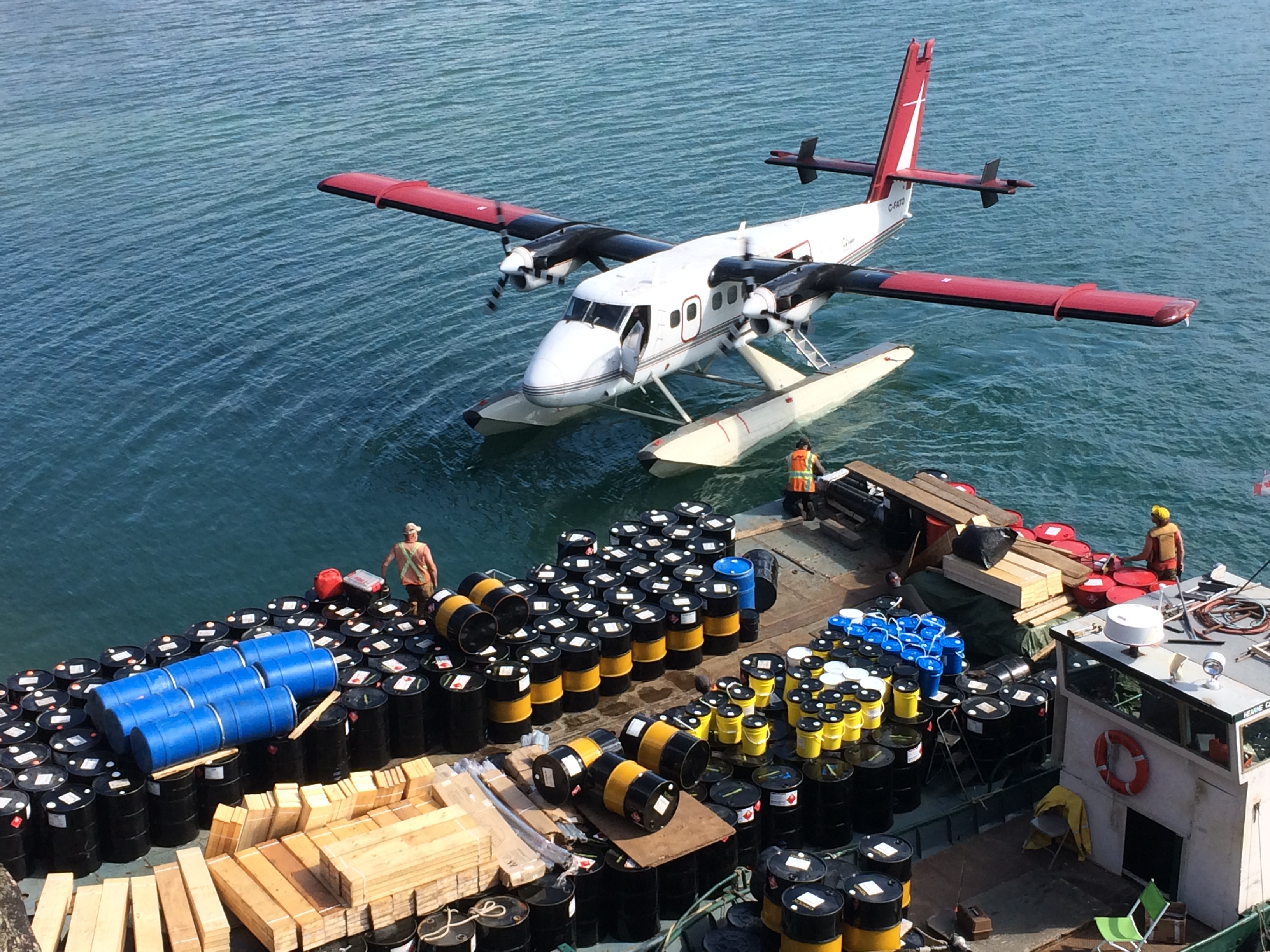
We visited with Tony Foliot, Dave Smith and company, while they were loading fuel drums from the East Arm Freighting barge onto a Twin Otter. They were pulled into a bay just around the corner from the homestead, and aside from the goods for the Olesens, had about 300 barrels of fuel for a mine site to the north. The plane took nine barrels per trip, plus consuming about one barrel worth of fuel, making one trip per hour, so they were going to be working for at least three days.
It took only fifteen minutes to load the plane each time, then they could wait (and fish) for about forty five minutes till work started again.
On Tuesday, after our failed attempt to hike along the Hoarfrost River to Lacy Falls the previous day, Joel and I took the dogsled trail through the forest to make sure we found the place. Sometimes the trail was a little uncertain through the burned forest, but it was much more reliable than the intermittent footpaths we thought we were following along the river on Monday. There is a canoe stashed on the bank of a pond on the river, and a short paddle and walk upstream brought us to the falls itself, where we fished for Grayling in the whirlpools at its base.
And were successful:
Grayling are beautiful fish – much more colourful in the water than in the frying pan – and fun to fish as they were biting almost every cast, and swimming wildly through the current as we reeled them in. These were about the biggest we caught (they get somewhat bigger) and we caught some that were not much more that six inches long.
On Wednesday the Olesens arrived back right on schedule in their sailboat. We spent the day pulling nets in the rain, shooting archery with the girls, and cleaning fish.
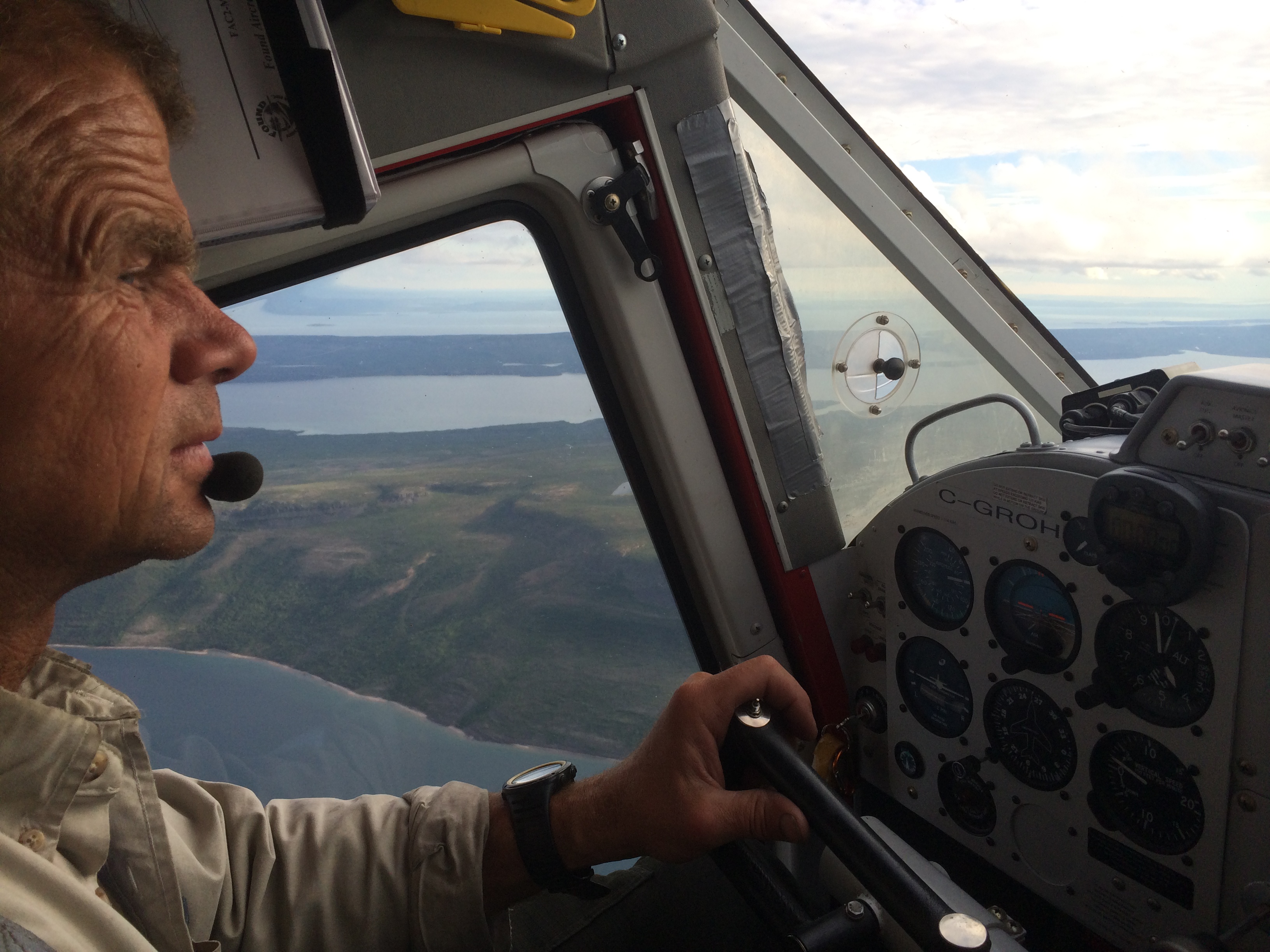
In the evening we hopped into the plane for the trip back, with Dave giving us a bit of an aerial tour of the East Arm along the way.
We had a really great time out there, and I sure look forward to my next chance to visit!
Oh – and I guess I didn’t show any pictures of the dogs… Well, how ’bout a video then? Here’s one for the dog lovers:
To inspire my fiddling friends in the Aurora Fiddle Society, I was sending out YouTube picks for a while – I’ve been falling a bit short lately, but I should get back into it. Anyway, they’re getting re-posted here for anyone who’s interested.
Leahy used to be the known as The Leahy Family, if I remember right. There were eleven kids in the family and they were all in the band. They grew up in Lakefield, which is pretty close to where I’m from, so I always knew of them as a kid. I’ve got an LP of them from the 80s.
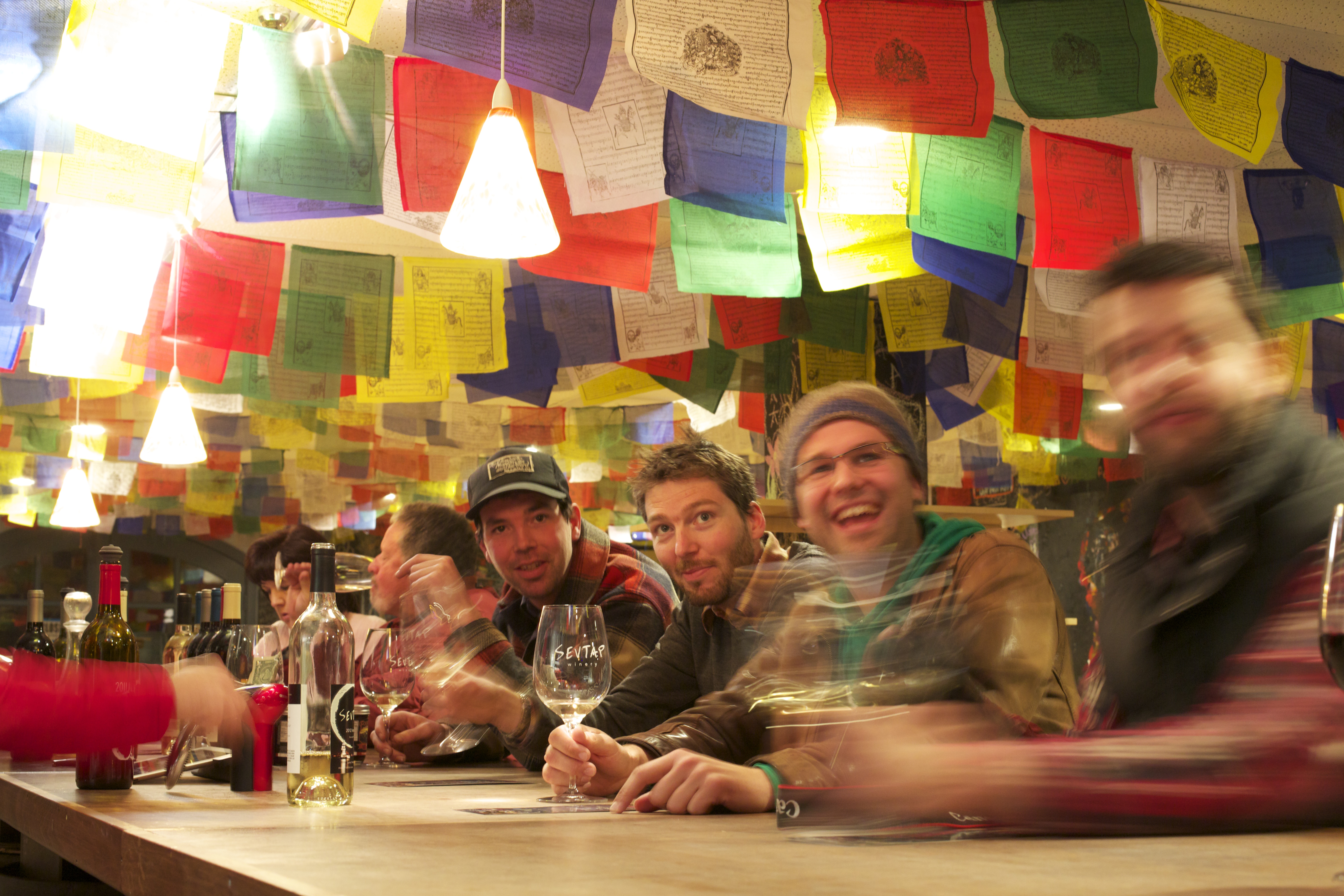
Last year when I recorded Westbound, I went down to California with the band and producer to a little town called Buellton, outside Santa Barbara. Actually we were hanging around a triangle of three towns, Buellton, Solvang and Los Olivos. It’s the wine growing region – lesser known than Napa I guess – where the movie Sideways was filmed. It’s the stomping ground of Bear Erickson, who runs Erickson Sound Labs in a small industrial park surrounded by wineries. Bear welcomed us with wide open arms, and brought us into his world, where he seemed to know everybody. He made us feel at home at his landlord’s quirky mansion up in the hills, where we stayed for five nights, and took us wine tasting at his friend’s bar and to some of his other haunts.
He was a great host at his studio, professional but casual, making the place feel like ours during our time there. The studio space includes his workshop, where he and his dad make their own unique guitars.
Legendary Quebec fiddler Jean Carignon plays La Grande Fleur. Check out his percussive footwork and playing style. This is from Pete Seeger’s folk music television show, and is recorded at Jean’s home in 1957.








 Ryan McCord